
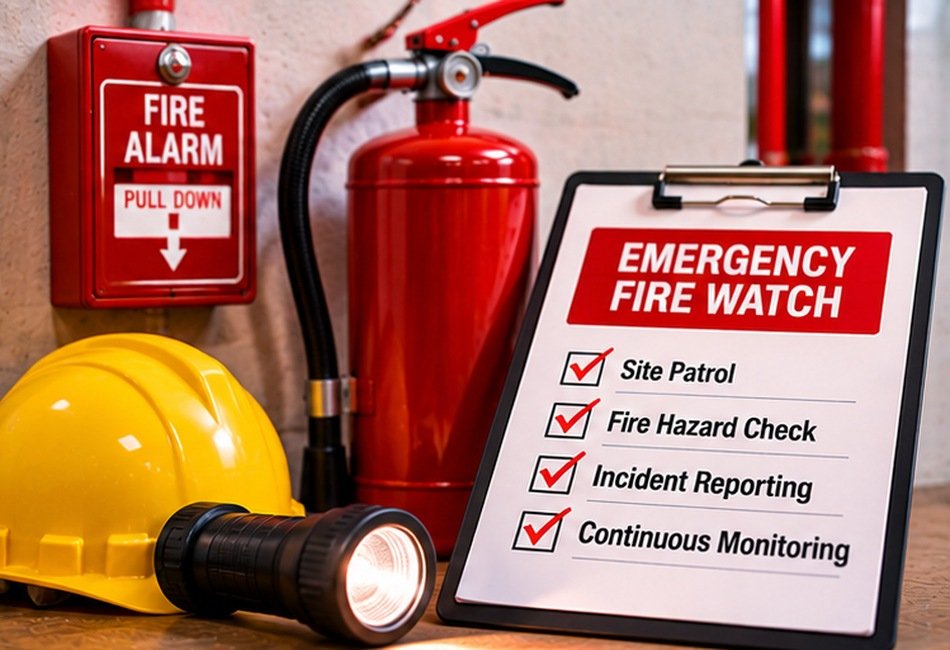
Why Fire Watch Service Planning Matters
Commercial properties, construction projects, and industrial facilities can experience periods when their normal fire protection arrangements are unavailable or disrupted. Scheduled maintenance, equipment repairs, construction activities, and unexpected system problems may create temporary safety concerns that require additional attention. Planning fire watch coverage helps property managers understand how these situations will be handled, who will be responsible for monitoring designated areas, and how concerns will be communicated to the appropriate personnel.
A well-organized plan also helps prevent confusion when several teams are working at the same property. Building management, maintenance contractors, security personnel, and fire watch providers may all have different responsibilities. Defining those responsibilities before coverage begins makes coordination easier. It also allows the organization to identify important details such as the affected areas, expected service duration, access arrangements, reporting procedures, and the process for ending temporary coverage.
Identifying When Temporary Fire Watch May Be Needed
Fire watch services may be considered when a building’s fire alarm, sprinkler, fire suppression, or other fire protection equipment is impaired. They may also be needed during certain construction, renovation, maintenance, or hot work activities. The decision should be based on the actual conditions at the property and the applicable requirements established by local authorities, fire codes, workplace regulations, and facility procedures.
Property managers should avoid assuming that every equipment issue requires the same response. The affected system, size of the building, occupancy, type of activity, and expected repair time can influence the appropriate arrangements. A qualified fire safety professional or responsible authority can help determine what precautions are necessary. Early communication is useful because it gives the organization more time to coordinate coverage and address operational concerns.
Assessing the Property Before Arranging Coverage
A property assessment helps establish what the fire watch assignment will involve. Relevant details may include the building layout, number of floors, access points, occupied areas, storage locations, and spaces where maintenance or construction is underway. Managers should also identify areas with combustible materials, equipment that generates heat, and locations where a fire could be difficult to detect quickly.
The assessment should consider how people move through the property and whether any areas have restricted access. Large facilities may require attention to several separate zones, while smaller properties may have specific rooms or work areas that need observation. Sharing accurate site information with the service provider helps clarify the assignment. It also reduces the risk of misunderstandings about which locations require monitoring and how personnel should reach them.
Defining the Scope of Fire Watch Responsibilities
Before service begins, the organization should establish the scope of the assignment. This may include designated patrol areas, observation duties, communication procedures, reporting expectations, and instructions for notifying management or emergency services. The scope should reflect the hazards and conditions identified during the property assessment rather than relying on a generic description of fire watch activity.
Responsibilities should be clear to everyone involved. Fire watch personnel should understand the locations they are assigned to observe, while property representatives should know how to receive updates and report changing conditions. The organization should also establish who can authorize changes to the assignment. Clear boundaries help prevent important tasks from being overlooked and ensure that fire watch personnel are not expected to perform unrelated duties that interfere with their assigned responsibilities.
Coordinating Service Schedules and Shift Coverage
Service schedules should account for the full period during which additional fire safety monitoring is required. This may include regular business hours, overnight work, weekends, holidays, or periods when contractors are performing maintenance. Managers should communicate expected start and end times, planned work activities, and any changes that could affect the assignment.
For longer projects, shift handoffs require particular attention. Incoming personnel should receive relevant information about the property, active work areas, reported concerns, and any changes to site instructions. Management should establish a reliable process for confirming that coverage remains continuous when required. If repairs take longer than expected, the service schedule should be reviewed promptly so that temporary monitoring arrangements remain aligned with the property’s current needs.
Reviewing Personnel Qualifications and Site Instructions
The suitability of assigned personnel is an important part of service planning. Organizations should confirm that fire watch personnel understand their duties, can follow site procedures, and know how to communicate an emergency. Any required training, qualifications, or equipment should be considered in relation to the assignment and applicable regulations. The specific expectations may differ depending on whether the work involves hot work, an impaired fire protection system, or another temporary hazard.
Site instructions should be practical and easy to understand. They may explain where personnel should report, which areas are included, whom to contact, and how to handle restricted access. Managers should also explain any unusual site conditions, such as ongoing repairs or changes to normal building operations. Providing this information before the assignment begins helps personnel work consistently and reduces the likelihood of avoidable delays.
Establishing Communication and Reporting Procedures
Reliable communication allows property managers to remain informed about the assignment. Before coverage starts, the organization should decide how personnel will contact supervisors, report observations, and communicate urgent concerns. The process may involve designated phone numbers, radios, written logs, or another method suitable for the property. Communication arrangements should remain practical during busy periods and should not depend on a single person being available at all times.
Reports should contain useful information rather than vague statements. Depending on the assignment, records may identify the time of an observation, the location checked, a concern discovered, and the person notified. Consistent reporting can help managers recognize repeated issues and coordinate corrective action. It also creates a clearer record of how the assignment was carried out, which can be useful when reviewing the property’s temporary safety arrangements.
Planning for Changes and Unexpected Conditions
Fire watch assignments may need to change when construction schedules shift, repairs are delayed, additional work areas become active, or building occupancy changes. Managers should have a process for reviewing these developments and communicating updated instructions. Personnel should know whom to notify if the conditions they observe no longer match the original assignment.
Unexpected circumstances should be handled through established site procedures. For example, a newly discovered hazard may require work to stop while the responsible supervisor evaluates the situation. An emergency should be reported through the property’s designated response process. Planning for these possibilities helps avoid improvised decisions and makes it easier for everyone involved to understand their responsibilities when conditions change.
Evaluating Providers and Confirming Service Details
When comparing service providers, property managers should look beyond availability alone. They should review the provider’s experience with relevant property types, communication practices, personnel arrangements, and ability to follow site-specific instructions. It is also useful to discuss scheduling, reporting, access requirements, and how changes to the assignment will be handled. These discussions help determine whether the proposed service is appropriate for the property’s actual needs.
Before confirming an arrangement, managers should make sure that the scope of work is clearly documented. The Fast Fire Watch Company can be considered when reviewing options for temporary fire watch coverage, with service expectations discussed in relation to the property and its requirements. Organizations should confirm all relevant details directly, including coverage locations, schedule, responsibilities, and communication procedures, before work begins.
Maintaining an Effective Fire Watch Plan
A useful fire watch plan should be reviewed throughout the assignment rather than treated as a one-time document. Managers should confirm that the affected areas remain accurate, communication channels are working, and personnel understand any revised instructions. If repairs are completed or the original hazard is no longer present, the organization should follow the appropriate process for verifying that normal fire protection arrangements have been restored.
After the assignment ends, a brief review can identify what worked well and where planning could improve. Managers may examine reports, scheduling issues, communication delays, and feedback from personnel involved in the work. Lessons from one project can help improve future arrangements. By preparing clear instructions, coordinating responsible parties, and reviewing changing conditions, organizations can manage temporary fire watch needs more effectively while supporting broader workplace fire safety efforts.