
Colorado homeowners depend on reliable HVAC equipment throughout the year. Winter can bring freezing temperatures, while summer can create a strong demand for dependable air conditioning. Because of these changing conditions, selecting and maintaining the right HVAC system is essential for indoor comfort.
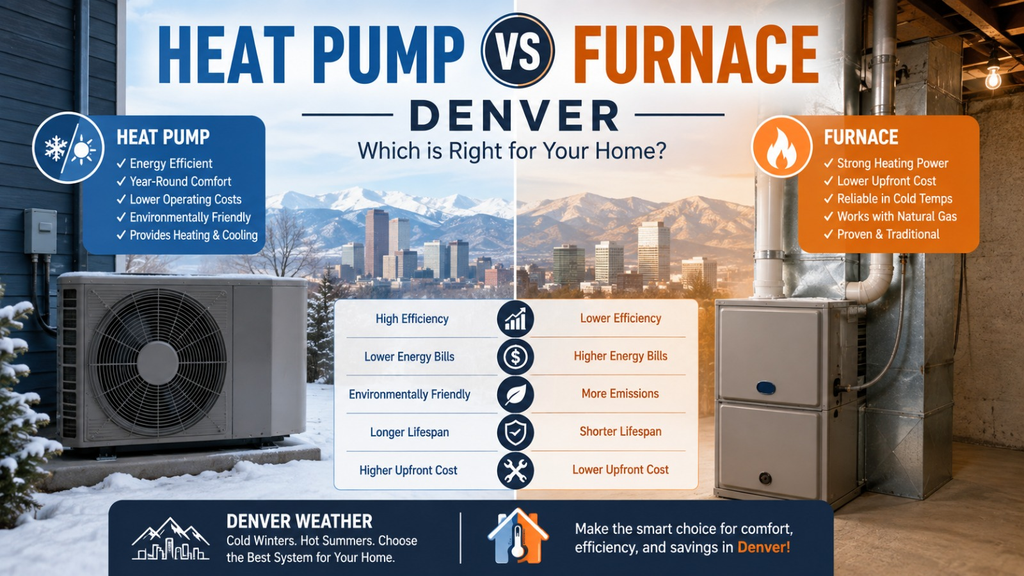
If you are searching for heating cooling services in Englewood Colorado, you may be considering whether your existing system should be repaired, replaced, or upgraded. One of the most important comparisons to understand is Heat pump vs furnace Denver.
Both heating technologies have advantages, but the right option depends on your home, budget, energy preferences, and comfort requirements.
The Importance of Reliable Heating and Cooling
Your HVAC system affects much more than the temperature inside your home. Properly functioning equipment can support consistent airflow, indoor comfort, and efficient operation.
Professional heating cooling services in Englewood Colorado can help homeowners with everything from routine maintenance to emergency repairs and complete HVAC replacements.
Common services include:
- Furnace installation
- Furnace repair
- Heat pump installation
- Heat pump repair
- Air conditioner service
- HVAC tune-ups
- Thermostat installation
- Ductwork inspections
- Airflow testing
- HVAC replacement
Regular professional service can also help identify equipment problems before they become major failures.
Heat Pump vs Furnace Denver: The Basic Difference
When researching Heat pump vs furnace Denver, start by understanding how the two systems generate indoor heat.
A furnace produces heat and distributes it throughout the house. Depending on the system, that heat can come from natural gas, propane, or electricity.
A heat pump uses a different approach. It transfers heat from one location to another. During winter, it moves available heat from outdoors into your home. During summer, it reverses the process to remove heat from the home.
Because of this design, a heat pump can provide both heating and cooling.
How a Furnace Provides Heat
A furnace uses a heating source to raise the temperature of air. A blower then pushes the heated air through ductwork and into different rooms.
Modern furnaces are available in several efficiency levels and configurations.
A properly maintained furnace can provide dependable heating for many years.
Furnace Advantages
Homeowners may choose a furnace because of its:
- Strong heating capacity
- Familiar operation
- Fast warm-air delivery
- Compatibility with existing ductwork
- Wide range of available models
- Reliable cold-weather performance
For homes already equipped with gas heating infrastructure, replacing an older furnace with a newer high-efficiency model may be a convenient option.
How a Heat Pump Provides Heating
A heat pump does not rely on combustion to create heat. Instead, it uses refrigeration technology to transfer heat.
Even when outdoor air feels cold, it can contain usable thermal energy. A heat pump extracts available heat and transfers it indoors.
During summer, the system works in reverse, moving indoor heat outside.
This ability to provide both heating and cooling is one of the main reasons homeowners consider heat pumps.
Heat Pump Advantages
A heat pump can offer several potential benefits:
One System for Multiple Seasons
Instead of relying on separate heating and cooling equipment, a heat pump can perform both jobs.
Efficient Heat Transfer
Heat pumps transfer heat rather than generating it directly, which can result in efficient operation under suitable conditions.
Electric Operation
Many modern heat pumps use electricity, making them an option for homeowners who prefer electric HVAC technology.
Year-Round Use
Because heat pumps can provide both heating and cooling, the equipment can operate throughout the year.
Heat Pump vs Furnace Denver: Which Is More Efficient?
Efficiency is often one of the first things homeowners consider when comparing Heat pump vs furnace Denver.
Heat pump efficiency depends on factors such as outdoor temperature, equipment model, system sizing, insulation, and installation quality.
Furnace efficiency depends on factors including fuel type, efficiency rating, equipment condition, and proper maintenance.
Rather than assuming that one technology is always cheaper to operate, homeowners should compare specific systems based on their home and expected usage.
An HVAC professional can help estimate potential energy consumption and explain which system may be appropriate.
What About Denver’s Cold Winters?
Cold-weather performance is an important part of the Heat pump vs furnace Denver discussion.
Traditional heat pumps may lose heating capacity as outdoor temperatures become colder. However, newer cold-climate heat pumps are designed to operate more effectively in lower temperatures.
A professional should consider the specific heat pump model, the home’s heating load, and backup heating requirements.
Some homeowners may also choose a hybrid system that combines a heat pump with a furnace.
What Is a Hybrid HVAC System?
A hybrid HVAC system, often called a dual-fuel system, combines a heat pump and furnace.
The heat pump can provide heating under appropriate conditions. When additional heating is needed, the furnace can provide supplemental heat.
This setup gives homeowners another option when comparing Heat pump vs furnace Denver.
Whether a hybrid system is worthwhile depends on the home’s infrastructure, equipment options, operating preferences, and installation cost.
When Should You Replace Your Furnace?
A furnace can often be repaired if the problem is relatively minor. However, replacement may be worth considering when the system becomes unreliable or expensive to maintain.
Common warning signs include:
- Frequent breakdowns
- Higher-than-normal energy bills
- Uneven heating
- Strange sounds
- Poor airflow
- Frequent component replacement
- Aging equipment
- Increasing repair costs
If your furnace is approaching the end of its useful life, compare replacement options before an emergency occurs.
This is a good time to discuss both modern furnaces and heat pumps with an HVAC professional.
When Should You Consider a Heat Pump?
A heat pump may be worth considering if your priorities include year-round heating and cooling from one system.
It can be particularly attractive for homeowners who are interested in electric heating and modern HVAC technology.
Before installation, however, your home should be evaluated for:
- Heating load
- Cooling load
- Insulation
- Ductwork
- Electrical capacity
- Existing HVAC equipment
- Airflow
- Backup heating requirements
Professional assessment helps determine whether a heat pump is suitable for your property.
The Role of HVAC Maintenance
Even the best HVAC equipment needs regular maintenance.
For furnaces, routine service may include inspecting burners, electrical connections, blower components, filters, and safety controls.
For heat pumps, technicians may inspect coils, outdoor components, airflow, electrical connections, and overall heating and cooling performance.
Regular maintenance can help detect problems early and keep equipment operating properly.
Homeowners should also replace HVAC filters as recommended by the equipment manufacturer.
Choosing Heating Cooling Services in Englewood Colorado
Finding the right HVAC provider is just as important as choosing the right equipment.
When researching heating cooling services in Englewood Colorado, look for a company that offers comprehensive HVAC support rather than only one type of service.
A professional provider should be able to help with:
- System diagnosis
- Repairs
- Preventive maintenance
- HVAC replacement
- New installations
- Heating upgrades
- Cooling upgrades
- System performance evaluations
Before approving a major repair or replacement, request a clear explanation of the work and associated costs.
Why Proper HVAC Sizing Matters
One of the most overlooked aspects of HVAC installation is system sizing.
A system that is too small may struggle to keep your home comfortable. A system that is too large may cycle on and off too frequently.
Incorrect sizing can affect comfort, efficiency, equipment performance, and longevity.
This is why professional load calculations and home assessments are important when installing new HVAC equipment.
How to Compare HVAC Replacement Options
If your current system needs replacement, avoid choosing equipment based only on the initial purchase price.
Instead, consider the complete ownership picture.
Look at:
Initial installation cost:
How much will the equipment and installation cost?
Operating expenses:
How much energy may the system use?
Maintenance:
What routine service will be required?
Expected lifespan:
How long might the equipment reasonably serve the home?
Comfort:
Can the system provide consistent temperatures?
Cooling capability:
If you choose a heat pump, you may receive heating and cooling from the same equipment.
Considering these factors can make your HVAC investment more practical.
Questions to Ask an HVAC Professional
Before selecting a new system, ask your HVAC contractor:
- Is my current system worth repairing?
- What is causing the current performance problem?
- Would a heat pump work well in my home?
- Should I consider a new furnace?
- Would a hybrid system be appropriate?
- What system size does my home need?
- What maintenance will the new system require?
- What warranty is included?
- How will the new equipment affect energy consumption?
- What installation work is required?
Getting clear answers can help you avoid making a rushed decision.
Final Thoughts on Heat Pump vs Furnace Denver
The Heat pump vs furnace Denver comparison does not have one answer that works for every homeowner.
A furnace can provide strong and dependable heating, while a heat pump can provide both heating and cooling from one system. Hybrid systems can combine the strengths of both technologies.
The best choice depends on your home’s size, insulation, existing infrastructure, heating requirements, cooling needs, budget, and long-term goals.
If you need professional heating cooling services in Englewood Colorado, start with a complete HVAC evaluation. A qualified professional can inspect your current equipment and help you understand your repair, replacement, and upgrade options.
With the right system, professional installation, and consistent maintenance, homeowners can enjoy dependable comfort through Colorado’s cold winters and warm summers.