
Introduction
In today’s digital world, data has become one of the most valuable resources for businesses, governments, financial institutions, and technology developers. Organizations increasingly depend on accurate casino analytics information to understand market trends, improve operations, manage risks, and make informed decisions. As blockchain technology continues to develop, blockchain analytics is emerging as an important tool for understanding digital transactions, tracking cryptocurrency movements, and identifying patterns across decentralized networks.
Blockchain analytics combines data analysis, advanced software, artificial intelligence, and blockchain technology to transform complex transaction records into useful insights. As digital assets, decentralized finance, and blockchain-based applications gain attention, the demand for reliable analytical solutions is expected to grow. Exploring the future of blockchain analytics reveals how this technology could influence financial security, business intelligence, regulatory compliance, and data-driven decision-making.
Understanding Blockchain Analytics
Blockchain analytics refers to the process of collecting, examining, and interpreting information recorded on blockchain networks. These networks maintain distributed ledgers that record transactions across multiple computers. Depending on the blockchain, transaction records may be publicly accessible, allowing analysts to examine activity without relying on a single central authority.
However, raw blockchain data can be difficult to understand. Transactions often involve complex wallet addresses, smart contracts, token transfers, and interactions between different applications. Blockchain analytics platforms organize this information into readable reports, visualizations, transaction histories, and behavioral patterns.
Businesses and researchers can use these insights to monitor network activity, evaluate digital asset movements, detect unusual transactions, and understand how blockchain ecosystems operate. As blockchain adoption expands, analytics will play a significant role in making decentralized systems easier to understand and manage.
The Growing Importance of Blockchain Analytics
The increasing use of blockchain technology across different industries is creating new opportunities for data analysis. Cryptocurrency exchanges, digital payment providers, investment companies, and decentralized applications all generate substantial amounts of transaction data.
Traditional analytical tools may struggle to interpret the unique structure of decentralized networks. Blockchain analytics addresses this challenge by providing specialized methods for organizing and examining transaction information.
Several factors are contributing to its growing importance:
- Increasing digital asset adoption: More individuals and businesses are interacting with cryptocurrencies and tokenized assets.
- Greater demand for transparency: Organizations want clearer insights into blockchain transactions and network activity.
- Regulatory expectations: Financial service providers may need analytical tools to support compliance and transaction monitoring.
- Expanding decentralized finance: Decentralized lending, trading, and payment applications create increasingly complex data environments.
- Improved decision-making: Detailed blockchain insights can help organizations evaluate risks and identify emerging opportunities.
These developments are encouraging businesses to invest in analytical systems that can interpret blockchain information efficiently.
Artificial Intelligence and Machine Learning
Artificial intelligence is likely to become one of the most influential technologies in the future of blockchain analytics. Traditional analytical systems often rely on predefined rules and manually configured alerts. Although these methods remain useful, they may not identify every unusual pattern in rapidly changing blockchain environments.
Machine learning can examine large datasets to identify recurring behaviors, detect anomalies, and highlight relationships that might otherwise remain unnoticed. AI-powered systems may also help analysts classify transactions, recognize emerging risks, and prioritize investigations.
For example, a financial organization could use machine learning to identify transaction patterns that differ significantly from established activity. Analysts could then investigate the findings and determine whether further action is necessary.
Natural language processing may also make blockchain analytics more accessible by allowing users to ask questions about transaction activity in everyday language.
Nevertheless, AI-generated insights require careful evaluation. Incomplete data, misleading correlations, and inaccurate wallet classifications can produce unreliable conclusions. Human oversight and transparent analytical methods will remain essential.
Real-Time Blockchain Data Analysis
The future of blockchain analytics will increasingly depend on the ability to process information quickly. In markets where digital assets move continuously, delayed analysis can limit the usefulness of important insights.
Real-time analytics systems monitor blockchain activity as new transactions are recorded. They can help businesses track asset movements, observe network congestion, monitor smart contract interactions, and identify unusual changes in transaction behavior.
For cryptocurrency exchanges and financial service providers, faster monitoring can support timely risk assessments. Blockchain application developers may also use real-time information to evaluate network performance and understand how users interact with their platforms.
As computing infrastructure improves, analytical platforms may become more efficient at processing large transaction volumes across multiple networks.
However, real-time analysis must account for differences in blockchain design, transaction finality, network reliability, and data availability. Accurate interpretation matters just as much as processing speed.
Blockchain Analytics and Financial Security
Financial security is another area where blockchain analytics could have a substantial impact. Digital transactions can cross borders quickly, and blockchain networks may connect numerous wallets, exchanges, decentralized applications, and service providers.
Analytics tools can help authorized organizations examine transaction histories, identify potentially suspicious activity, and investigate connections between addresses. These capabilities may support anti-money laundering programs, fraud investigations, and compliance procedures.
Blockchain analytics can also help organizations evaluate exposure to known risks, provided their datasets and classification methods are sufficiently reliable.
An important limitation is that a wallet address does not automatically reveal the real-world identity of its owner. Analysts may infer relationships from transaction patterns or information supplied by legitimate sources, but such conclusions can be uncertain.
Consequently, blockchain analytics should support evidence-based investigations rather than serve as an unquestionable source of identity or wrongdoing. Strong privacy protections, appropriate authorization, and human review are necessary to prevent inaccurate conclusions.
Cross-Chain Analytics and Interoperability
Blockchain technology is no longer limited to a single network. Numerous blockchains now support different cryptocurrencies, applications, smart contracts, and digital services. As these ecosystems expand, understanding activity across multiple networks becomes increasingly important.
Cross-chain analytics aims to connect information from different blockchain environments into a more comprehensive analytical view.
For example, an organization may need to understand how a digital asset moves between networks or how users interact with applications operating on separate blockchains. Cross-chain tools can help analysts follow supported transaction relationships and examine broader activity patterns.
Interoperability will remain a major challenge because networks differ in their technical structures, transaction formats, and data availability. Bridges and cross-chain protocols may also introduce additional complexity.
Future analytical platforms that standardize data collection and improve transaction mapping could make blockchain ecosystems easier to evaluate. Such improvements would help researchers and businesses develop a more complete understanding of decentralized activity.
Business Intelligence and Strategic Decision-Making
Blockchain analytics is also becoming relevant beyond cryptocurrency trading and financial compliance. Businesses can use blockchain-based information to support research, evaluate digital products, and understand the performance of blockchain-powered services.
For example, a company developing a decentralized application could examine transaction frequency, active wallet counts, smart contract usage, and changes in network participation. These indicators may help the company identify product weaknesses and understand user behavior.
Supply chain organizations could analyze relevant blockchain records to improve visibility into product movement and transaction documentation. Digital asset businesses might use analytical dashboards to evaluate market activity and identify changes in customer demand.
When combined with other business intelligence systems, blockchain data can provide additional context for strategic planning.
However, organizations should avoid treating blockchain metrics as complete measures of business success. Transaction volume and wallet activity do not necessarily represent unique users, genuine demand, or long-term customer loyalty. Reliable decisions require multiple sources of evidence.
Privacy, Ethics, and Regulatory Challenges
Despite its potential, blockchain analytics raises important questions about privacy, fairness, and responsible data use.
Public blockchain records can remain accessible for extended periods. When transaction information is combined with external datasets, it may reveal more about individuals or organizations than originally intended.
Businesses using analytical platforms must therefore consider data protection requirements, access controls, information security, and the legal obligations applicable to their operations.
Regulatory frameworks also differ between jurisdictions and may change as digital asset markets develop. Analytical providers must adapt to evolving requirements while maintaining accurate and transparent reporting.
Another challenge is the risk of false positives. A transaction pattern that appears unusual may have a legitimate explanation. Incorrect classifications can affect users, businesses, and investigations.
Future blockchain analytics solutions will need stronger validation procedures, clearer explanations of analytical findings, and safeguards against unjustified conclusions. Responsible innovation should balance transparency with legitimate privacy rights.
The Role of Data Visualization and Accessibility
As blockchain datasets become more complex, presenting information clearly will be essential. Advanced analytics has limited value if only highly specialized technical professionals can understand its results.
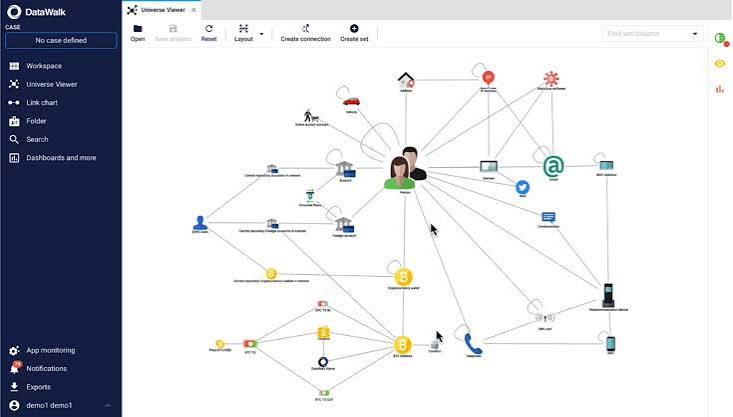
Data visualization tools can transform complicated transaction relationships into interactive charts, dashboards, timelines, and network diagrams. These features allow users to explore patterns without examining every transaction individually.
Future platforms may offer customizable dashboards for compliance teams, business executives, developers, and researchers. Automated summaries could explain major changes in network activity, while interactive tools could help users investigate specific transactions.
Improved accessibility may encourage wider adoption among smaller businesses and organizations without large technical teams.
The most effective platforms will combine detailed analytical capabilities with understandable explanations, allowing users to explore the evidence behind important conclusions.
What the Future Holds for Blockchain Analytics
The future of blockchain analytics will likely be shaped by the convergence of artificial intelligence, cloud computing, privacy-enhancing technologies, and cross-chain infrastructure.
Analytical platforms may become more automated, helping organizations identify relevant changes without requiring constant manual monitoring. Improved data integration could connect blockchain information with conventional financial records, business systems, and supply chain databases.
Privacy-preserving methods may also help organizations analyze certain patterns while limiting unnecessary exposure of sensitive information. Meanwhile, better standards for data quality and classification could improve consistency between analytical providers.
As blockchain applications develop, demand may expand for tools that support tokenized assets, decentralized identity systems, digital ownership records, and automated financial services.
Nevertheless, adoption will depend on measurable value, technical reliability, regulatory clarity, and user confidence. Not every blockchain application will require sophisticated analytics, and organizations will need to evaluate whether the benefits justify the costs.
Conclusion
Blockchain analytics is becoming an important part of the evolving data-driven economy. By transforming complex transaction records into useful insights, it can help businesses understand blockchain networks, strengthen financial monitoring, improve operational visibility, and support informed decisions.
Artificial intelligence, real-time processing, cross-chain analysis, and advanced visualization are likely to expand its capabilities in the coming years. At the same time, privacy concerns, data quality limitations, and regulatory challenges will require careful attention.
The long-term success of blockchain analytics will depend not only on technological innovation but also on responsible implementation. Organizations that combine reliable data, transparent analytical methods, and human judgment will be better positioned to benefit from this developing field. As blockchain ecosystems continue to mature, analytics will help bridge the gap between decentralized data and practical knowledge, making complex digital environments easier to understand and navigate.